The Road to Hakone
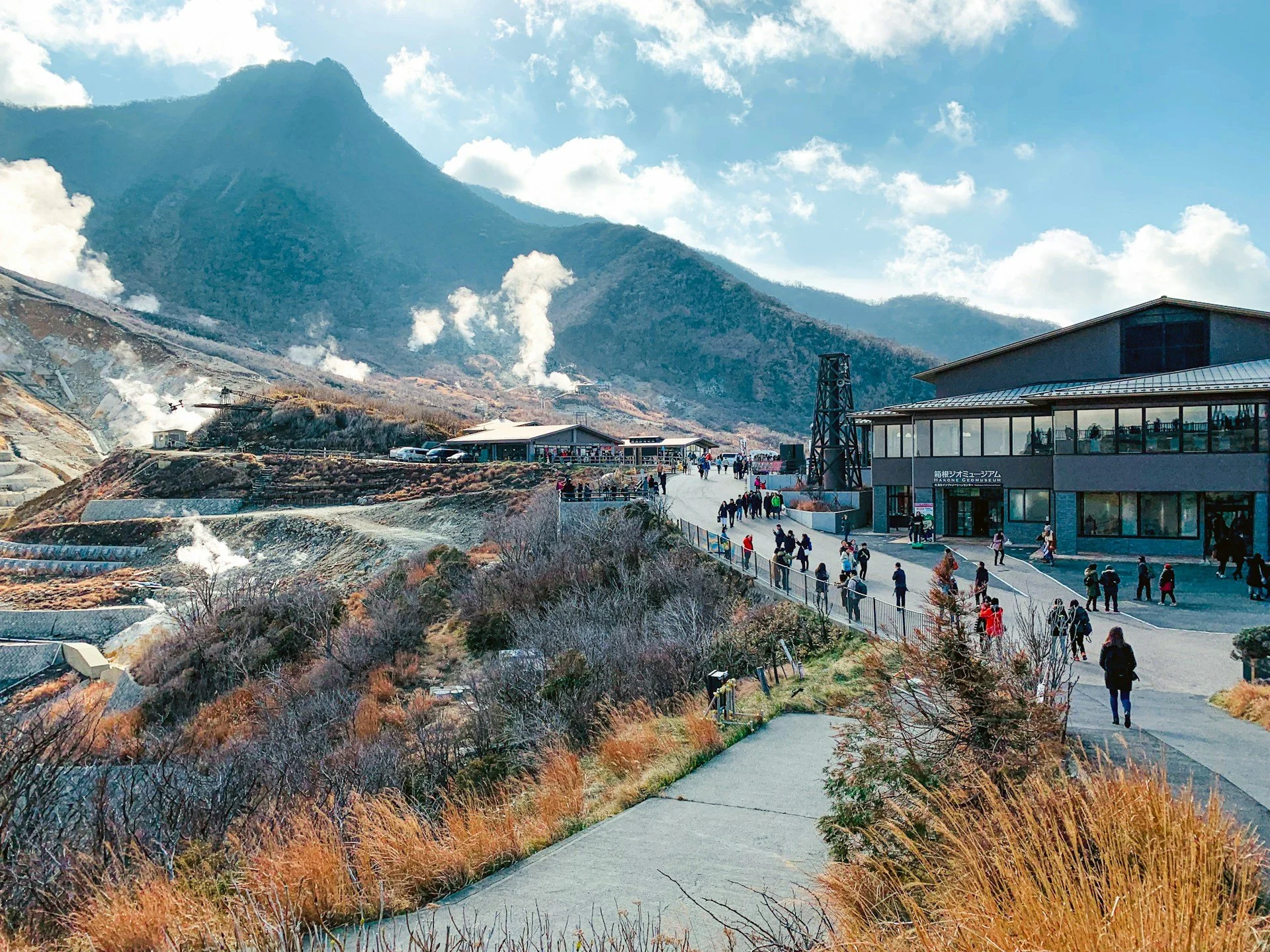
Destination Hakone
Tokyo does not end all at once.
It loosens its grip gradually.
Buildings become smaller. Traffic begins to thin. The city gives way to stretches of road where, for the first time that morning, you begin to notice the car beneath you.
Ahead lies Hakone.
People have been making this journey for centuries.
Long before there were sports cars in these mountains, the Old Tokaido Road crossed Hakone on its way between Edo, now Tokyo, and Kyoto.
Established under the Tokugawa government in the early 17th century, the Tokaido became one of Japan’s great routes. Regional lords, merchants, couriers, pilgrims, and ordinary travelers passed through Hakone, one of the most demanding sections of the journey.
Parts of that old road remain.
Stone paving disappears beneath towering cedars. The route climbs through forest. Near Lake Ashi, the reconstructed Hakone Checkpoint recalls a time when movement along the road was closely controlled.
The journey is easier now.
And considerably more fun.
The Turnpike
For drivers, the modern road to Hakone often means the Hakone Turnpike.
About 57 miles south of Tokyo, it is the sort of road that makes an early departure worthwhile.
It climbs away from the urban edge toward Hakone through long bends, elevation changes, forest, and occasional openings toward the surrounding mountains.
This is Porsche country.
You may encounter an early 911 coming down the mountain. A Cayman disappearing into the next bend. A GT3. A Boxster with its roof down.
Perhaps a 356.
But the car matters less than you might expect.
There is something satisfying about a road that asks for your attention without demanding that you hurry.
Find the rhythm of it.
Let the road come to you.
Stop when something looks interesting.
Hakone rewards curiosity.
Miyanoshita
One of those stops should be Miyanoshita.
The small mountain town has welcomed international travelers for generations, and tucked just below its railway station is NARAYA CAFE.
It occupies buildings connected to the former Naraya Ryokan, an inn whose history stretched back some 300 years.
At the center of the café is a surprise you are unlikely to find at your neighborhood coffee shop: a natural hot-spring footbath.
Order coffee, something small to eat, remove your shoes, and sit with your feet in the warm spring water while Hakone carries on around you.
There is also a gallery and a small shop featuring work by local makers.
It is exactly the sort of place we hope members will tell one another about.
Not because it appears on a list of things you are supposed to see.
Someone went there and thought:
You should know about this.
The Old Road
Before leaving Hakone, find a section of the Old Tokaido.
Walk it.
The contrast is worth experiencing.
A few hours earlier, you may have been guiding a Porsche through the Turnpike.
Now you are standing on a route crossed on foot by travelers more than three centuries ago.
The road beneath you has changed.
The reason for taking it may not have.
There has always been something compelling about leaving one place for another and discovering what happens in between.
Stay Awhile
That may be the better way to experience Hakone.
Don't make it a run from Tokyo and back.
Stay.
Find a ryokan.
Take the waters.
Visit the Hakone Open-Air Museum.
Eat somewhere small.
Wake early the following morning.
Drive another road simply because you have not driven it before.
The point is not to collect destinations.
It is to leave enough room for discovery.
This is the kind of journey The Journal will return to.
A road worth driving.
A place worth stopping.
Something worth knowing that another member might never have found alone.
And perhaps that is where The Journal ends and the community begins.
You have your own road.
Your own café.
Your own small hotel, workshop, museum, restaurant, view, or unexpected turn that you still remember.
Share it.
The Roadbook is waiting.