The Return of the Small Room
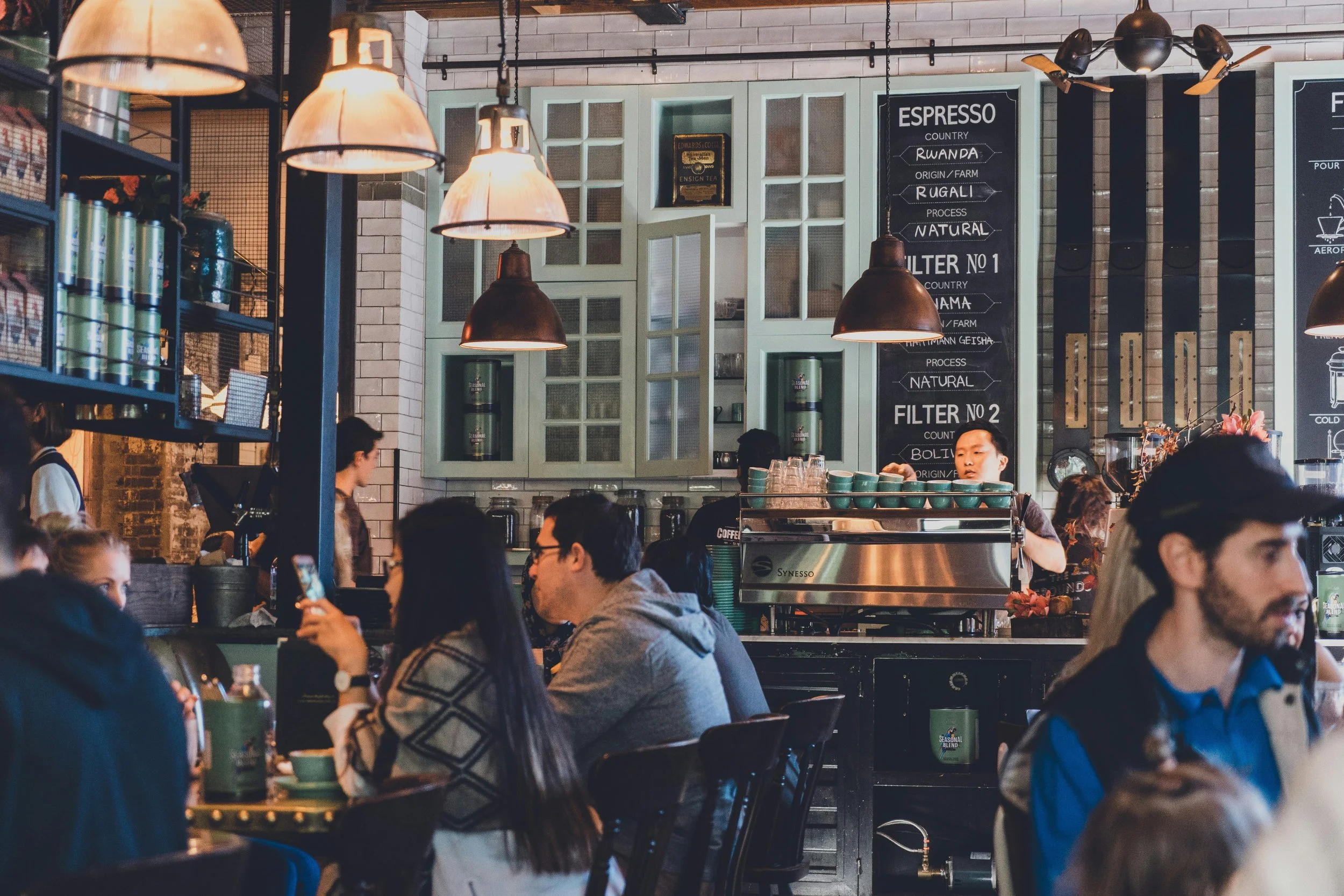
Something is happening in the living rooms of Paris, the brownstones of Brooklyn, and the machiya of Kyoto.
People are gathering again.
Not at conferences or behind screens, but around tables, in workshops, private dining rooms, cafés, garages, libraries, and homes.
Small groups. Good conversation. No audience required.
The salon, one of the oldest forms of social exchange, is finding its way back into modern life.
This is not nostalgia.
It may simply be that we have rediscovered something the internet made easy to forget: some conversations become better when fewer people are in the room.
The People You Wouldn't Otherwise Meet
The best gatherings rarely depend on everyone having the same profession, background, or point of view.
Quite the opposite.
Imagine a table in Tokyo with an architect, a photographer, a ceramicist, a hotelier, a founder, and someone who happens to know every worthwhile driving road outside the city.
What connects them may be little more than curiosity.
Or perhaps a shared appreciation for Porsche.
The car gets them into the same room.
Then something else happens.
The architect knows a small hotel in Naoshima.
The photographer introduces the ceramicist.
Someone recommends a road through Nagano.
A conversation about an old 911 becomes a conversation about craftsmanship, travel, family, work, or why certain things seem to get better with age.
Nobody arrived to network.
Yet everyone leaves knowing someone they did not know before.
The Value of a Smaller Room
There is a tendency to measure communities by size.
More members. More activity. More posts. More reach.
But the things that make a community worth belonging to are difficult to measure that way.
Did you meet someone interesting?
Did you discover something you would not have found yourself?
Did a conversation continue after everyone went home?
Would you want to sit at the table again?
A dinner for eight can accomplish something a gathering of eight hundred cannot.
The value is not scarcity for its own sake.
It is enough room to notice one another.
The Geography of Curiosity
Place matters, too.
Different cities produce different conversations.
Tokyo offers an extraordinary intersection of cars, design, food, fashion, photography, and craft.
London brings together history and reinvention.
Los Angeles moves easily between automobiles, architecture, art, film, and the Pacific.
Stuttgart carries the history of Porsche, but following that history outward can lead to workshops, mountain roads, small hotels, vineyards, and people whose lives have intersected with the marque for generations.
Lisbon, Copenhagen, Melbourne, Mexico City, New York.
Each offers its own discoveries.
This is one reason an international community becomes interesting.
A member in London notices something a member in Cincinnati might never encounter.
Someone in Tokyo introduces us to a place we would never have known to look for.
A member in California shares a road that becomes part of someone else's journey.
The world becomes a little more accessible through people who know it firsthand.
Paying Attention
Perhaps that is the skill worth cultivating now.
Paying attention.
Not to everything.
To what deserves it.
The small restaurant someone quietly returns to every year.
The independent magazine still worth reading.
The workshop where things are repaired rather than replaced.
The hotel you remember long after checking out.
The road worth taking even though there is a faster one.
The person you almost didn't meet.
These discoveries rarely arrive through an algorithm at precisely the right moment.
More often, someone tells you.
That is where a community becomes useful in the best sense of the word.
Not another stream of information.
A collection of people paying attention in different parts of the world and sharing what they find.
That is where a community becomes useful in the best sense of the word.
Not another stream of information.
A collection of people paying attention in different parts of the world and sharing what they find.
It is also the idea behind 1948, our salon inside 356.
A place for introductions, questions, stories, discoveries, and conversations that might begin with Porsche and wander somewhere entirely unexpected.
Porsche in all its forms brings us together.
Where the conversation goes from there is the interesting part.